Understanding why AI systems behave as they do is becoming increasingly important as their capabilities expand. At the ATRIUM Summer School in Athens, AIXPERT introduced researchers to approaches that could help make these systems more transparent and trustworthy.
Artificial intelligence can now perform increasingly complex tasks, from analysing historical documents to interpreting medical data. Yet a fundamental challenge remains: even when AI systems produce accurate results, understanding how they arrive at their conclusions is far from straightforward.
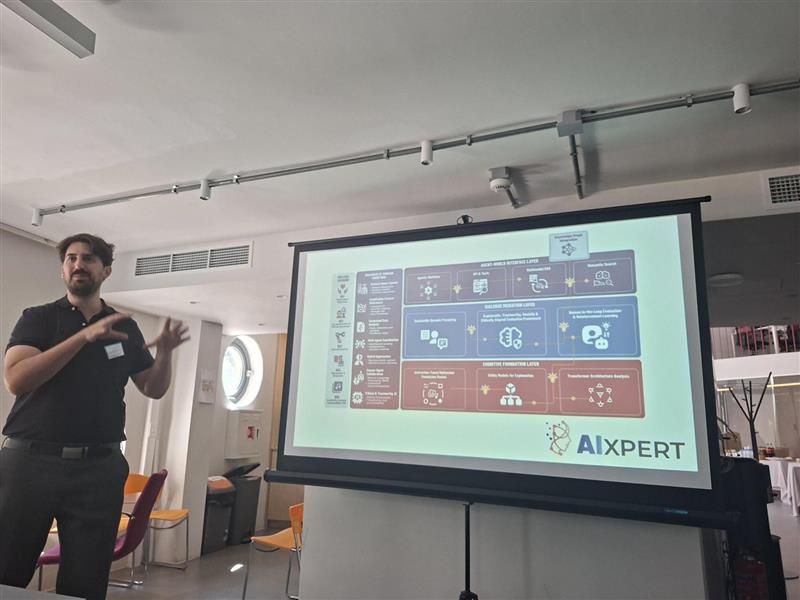
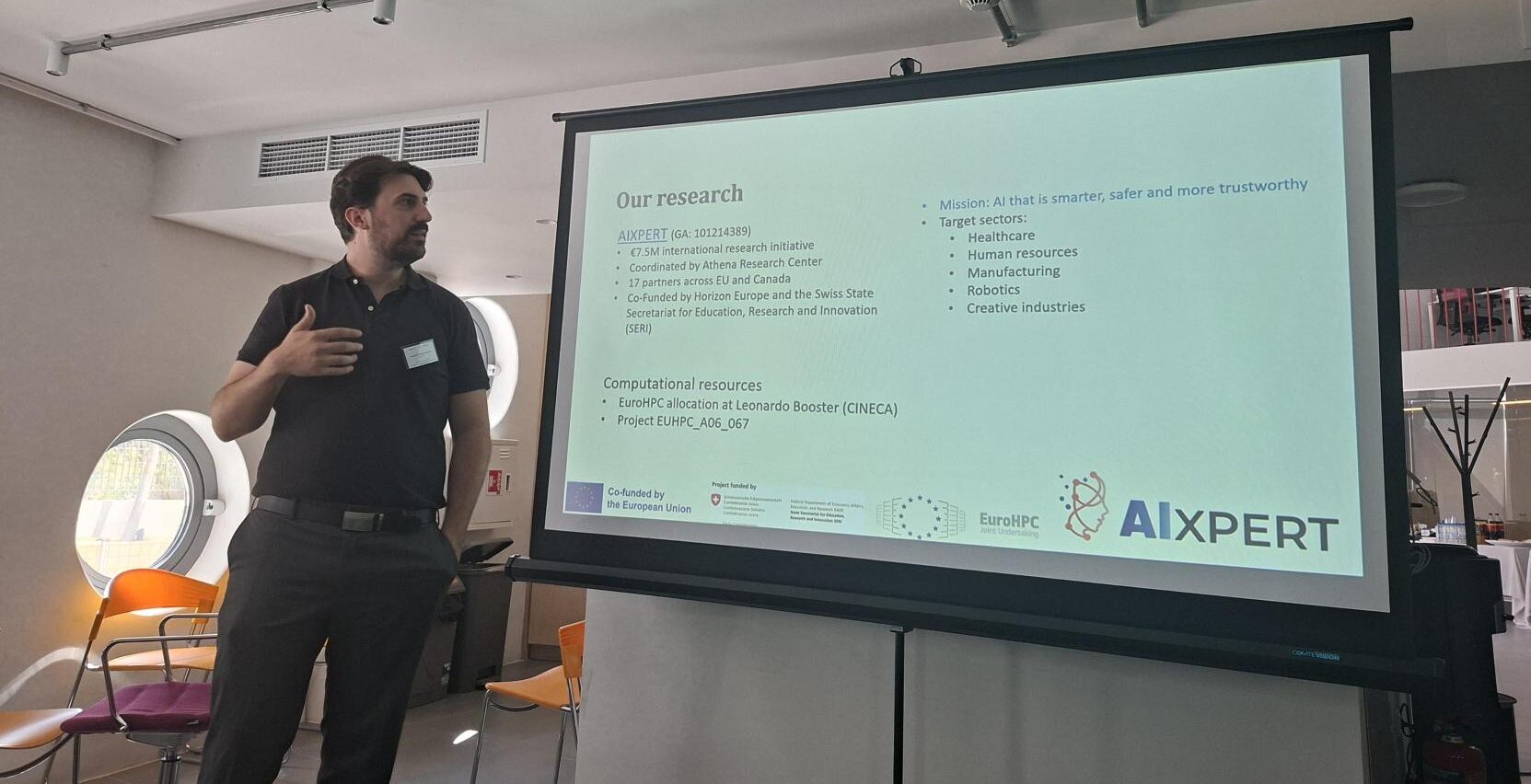
This question was explored by George Paraskevopoulos from Athena Research Center, who represented AIXPERT at the ATRIUM TNA Summer School on Language Technology and Artificial Intelligence for Digital Humanities, held in Athens, Greece, from 21–25 September 2026.
Organised by the CLARIN research infrastructure and Athena Research Center’s Institute for Language and Speech Processing (ILSP), the five-day school introduced participants to AI and language technologies for digital humanities, including natural language processing, large language models and their applications in research.
Looking beyond the AI black box
On 25 September, Paraskevopoulos delivered a tutorial on explainable AI (XAI) and mechanistic interpretability, exploring how researchers can investigate the decisions and internal workings of complex AI models.
While traditional explainability methods help identify which factors influence an AI system’s predictions, mechanistic interpretability takes the investigation further by examining the computational processes responsible for its behaviour.
The tutorial introduced participants to recent advances in the field, including methods for identifying meaningful representations within neural networks and testing whether particular internal mechanisms genuinely influence model outputs.
These approaches address a central challenge in trustworthy AI: distinguishing explanations that merely appear convincing from those that faithfully reflect how a model operates.
Connecting AI research across disciplines
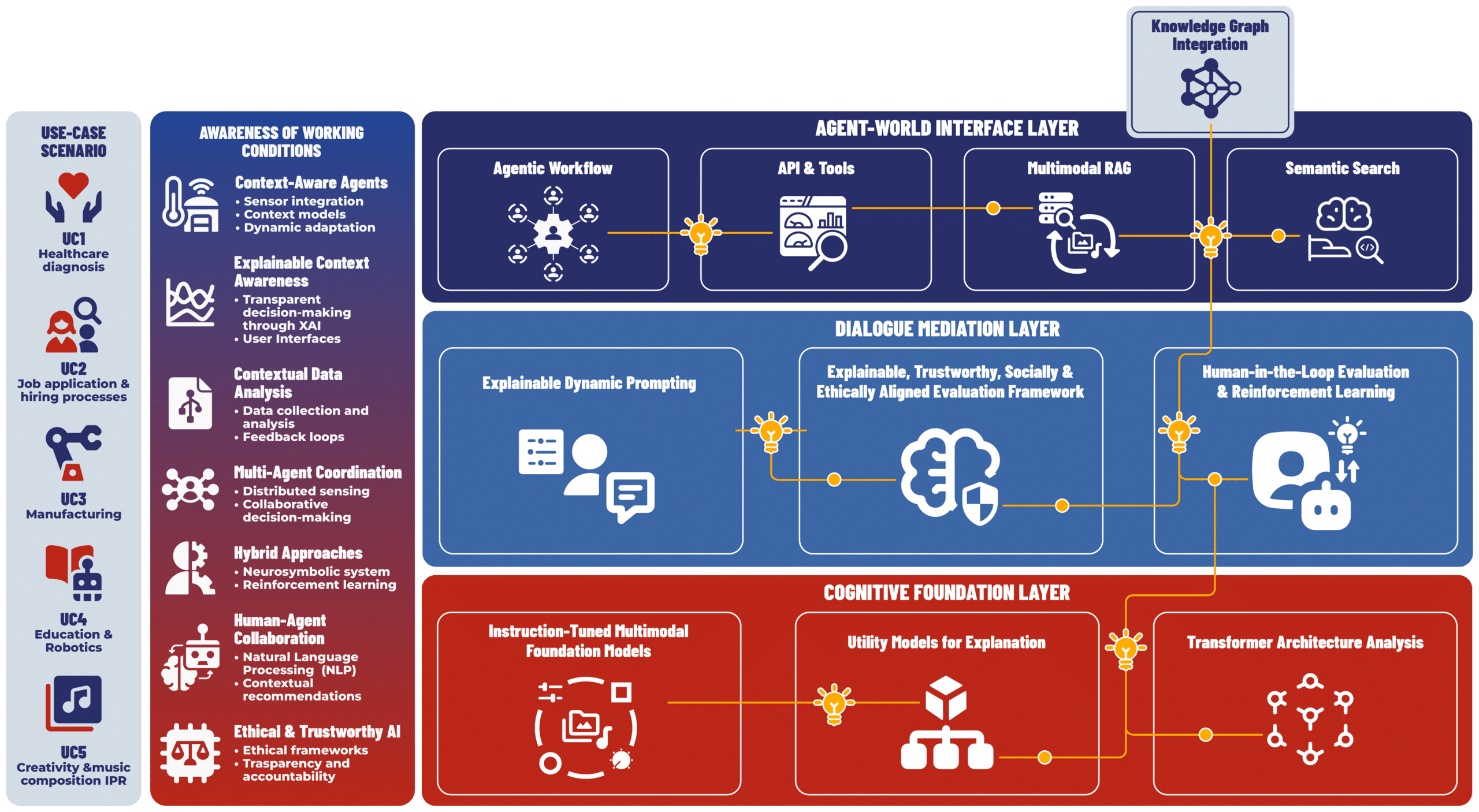
The topic closely aligns with AIXPERT’s work on explainable, human-centred and trustworthy AI. As foundation models are increasingly deployed in fields such as healthcare, recruitment and manufacturing, the ability to understand, evaluate and scrutinise their behaviour becomes essential.
AIXPERT’s contribution to the ATRIUM Summer School also provided an opportunity to bring research on AI interpretability to the digital humanities community, where language models are opening new possibilities for analysing cultural, historical and linguistic data.
Through activities such as this tutorial, AIXPERT supports knowledge exchange across disciplines and contributes to the wider scientific discussion on how increasingly capable AI systems can become more transparent, accountable and trustworthy.